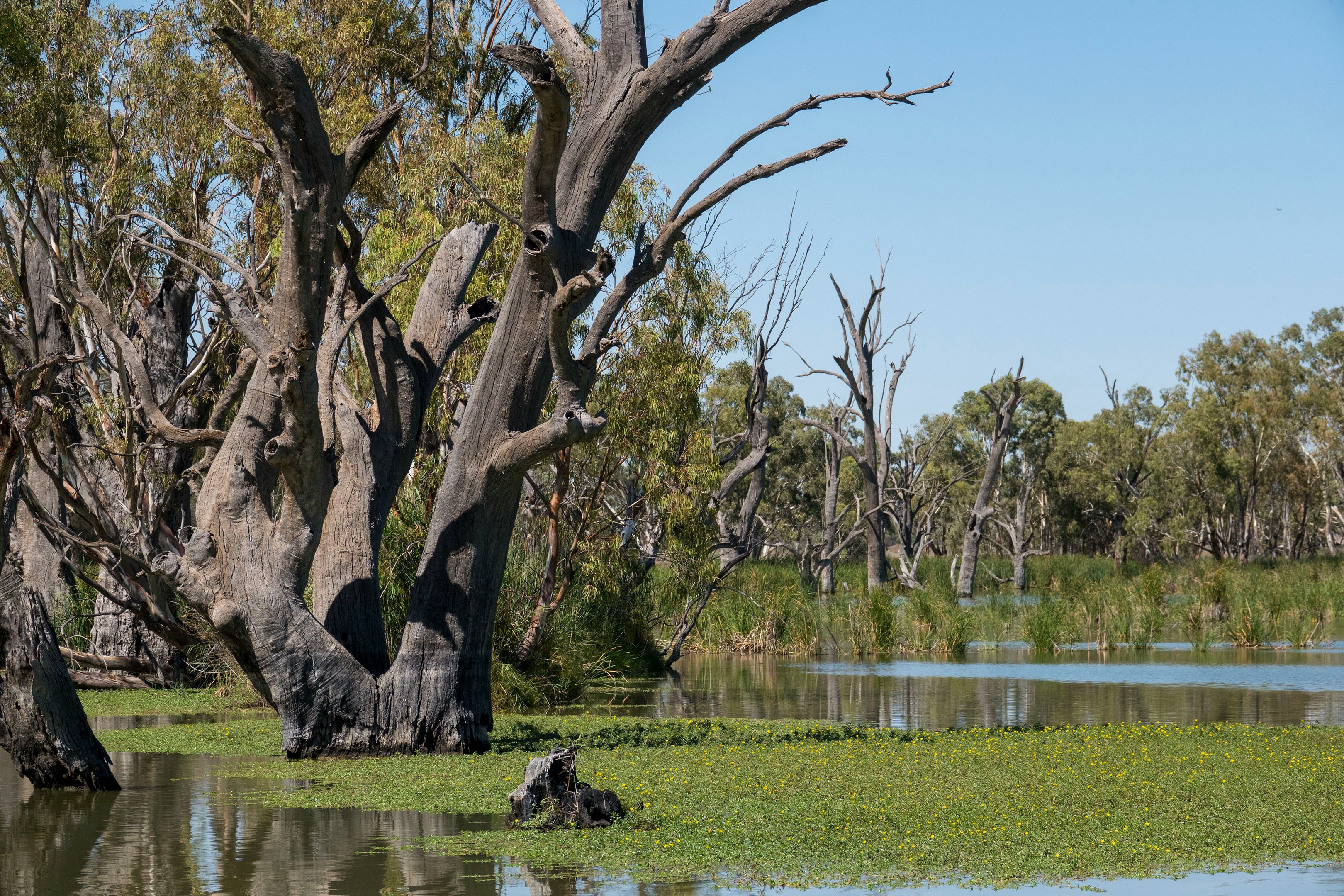
Scientists in New South Wales are conducting desperate rescue operations, digging through boggy mud to extract more than 300 broad-shelled turtles trapped in the dried Gwydir wetlands after the state water agency abruptly halted environmental flows following a single landowner's complaint about property overflow.
The footage, supplied by Greens legislative council member Cate Faehrmann, reveals researchers from the University of New England working frantically in the Gingham watercourse to reach turtles buried under layers of desiccated sediment. Conservation biologist Professor Debbie Bower described the scene as "a disaster," noting that environmental water remains stored in dams but WaterNSW refuses to authorize its release.
Institutional Paralysis Over Water Allocation
The Gwydir wetlands crisis exposes a fundamental dysfunction in how environmental water rights are administered when they conflict with private property concerns; the broad-shelled turtles—a species already under pressure from habitat loss—face mass mortality not from drought but from bureaucratic inaction. WaterNSW's decision to halt flows represents a striking prioritization of a single complainant's property interests over legally mandated environmental protections, suggesting that Australia's environmental water frameworks lack sufficient institutional backbone when tested by political pressure.
This pattern of regulatory capture—where agencies tasked with environmental stewardship defer to agricultural and property interests—undermines decades of conservation investment across river systems that depend on managed environmental flows. The fact that water sits available in storage while protected species die downstream reveals how quickly environmental commitments can be abandoned when they generate even minor private-sector friction.
Parallels in River Basin Management
The Australian crisis resonates strongly with India's own struggles to balance ecological flows against agricultural and industrial water demands across major river basins; India has faced similar institutional challenges where environmental flow requirements established in the 2012 National Water Policy compete with irrigation and urban water allocation pressures. The Gwydir situation illustrates how environmental water allocations—even when legally protected—remain vulnerable to political override when agencies lack clear enforcement mechanisms or institutional courage.
India's experience with wetland degradation, particularly in systems like the Chilika Lake and Keoladeo National Park, demonstrates similar tensions between conservation mandates and local economic pressures. The key difference lies in institutional design: where India has increasingly moved toward centralized environmental oversight through the National Green Tribunal and stricter environmental clearance processes, Australia's federal system appears to allow state-level agencies greater latitude to abandon environmental commitments under pressure.
Climate Adaptation and Institutional Resilience
The turtle rescue operation underscores a broader challenge facing water-scarce regions globally—how to maintain ecological resilience when extreme weather events stress both human and natural systems simultaneously. As climate change intensifies drought cycles and flood-drought alternations across both continents, the institutional frameworks governing environmental water allocation will face increasing pressure from competing demands.
For countries developing or refining their environmental flow policies, the Gwydir crisis offers a cautionary example of how quickly conservation gains can unravel when regulatory institutions lack sufficient independence from short-term political pressures; effective environmental water management requires not just legal frameworks but institutional structures that can withstand the inevitable conflicts between ecological and economic interests during times of stress.
The sight of scientists digging through mud to save endangered turtles while water sits unused in nearby dams represents more than local environmental mismanagement—it signals a fundamental failure of institutional design that India and other water-stressed nations must address as they build climate-resilient governance systems capable of protecting both human communities and ecological systems through increasingly volatile environmental conditions.