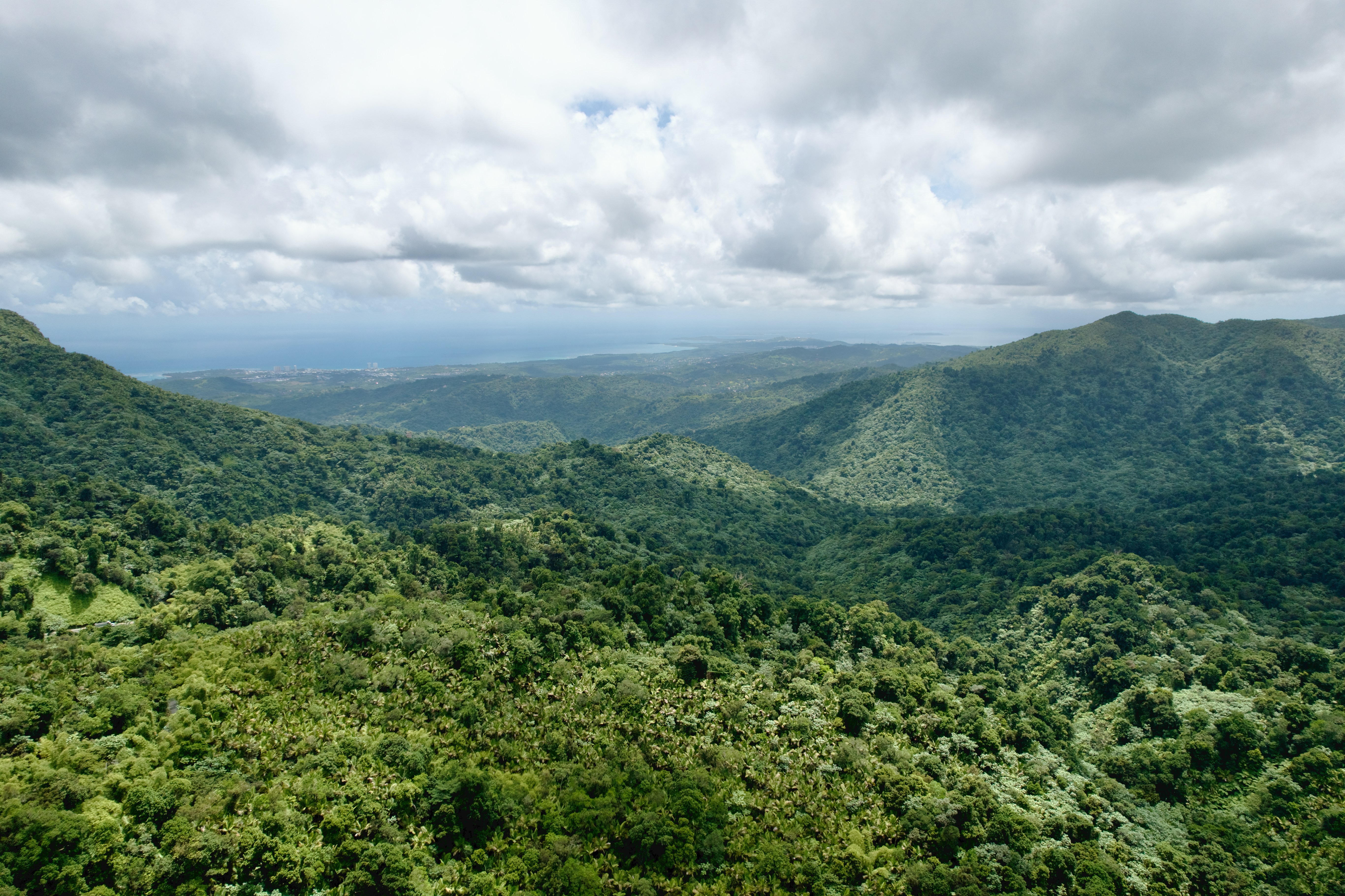
Puerto Rico's El Yunque national forest has opened a new visitors center following extensive hurricane damage, marking not just an infrastructure milestone but a deliberate fusion of ecological restoration with cultural revitalization. The facility now hosts arts festivals alongside traditional conservation programming; this dual mandate reflects a broader understanding that forest resilience and human community resilience operate as interconnected systems rather than competing priorities.
The rebuilding effort demonstrates how protected forests can serve as anchors for both biodiversity recovery and economic regeneration in post-disaster contexts. Rather than simply reconstructing what existed before the hurricanes, the new center embeds cultural activities directly into the forest experience—a recognition that lasting conservation requires active community engagement rather than passive protection models.
Nature-Based Recovery Architecture
The approach taken at El Yunque suggests that climate-resilient infrastructure must account for both physical storm resistance and social cohesion; the arts programming creates ongoing community investment in the forest's wellbeing while generating economic activity that supports conservation goals. This model challenges conventional separation between conservation zones and cultural spaces, instead treating them as mutually reinforcing elements of landscape resilience.
For countries facing intensifying climate impacts, the Puerto Rican experiment offers instructive precedent: disaster recovery presents opportunities to rebuild systems that are more integrated and adaptive than their predecessors. The forest center's design philosophy—embedding cultural life within conservation infrastructure—could inform approaches to protecting and revitalizing other tropical forest systems under climate stress.
Community-Centered Conservation Models
The integration of arts festivals with forest management reflects growing recognition that conservation outcomes improve when local communities have active, creative stakes in protected area success. Rather than treating visitors as external to the ecosystem, the programming makes cultural expression part of the forest experience itself; this approach builds stronger constituencies for long-term protection while creating economic incentives that align with conservation goals.
Such models become particularly relevant for tropical regions where forest protection often conflicts with immediate economic needs. By demonstrating that conservation infrastructure can serve multiple community functions simultaneously, El Yunque's rebuilding offers a template for reconciling environmental and social priorities in post-disaster contexts.
The Puerto Rican experience suggests that effective climate adaptation requires rethinking the boundaries between natural and cultural systems; forests that integrate community life may prove more resilient to future shocks than those managed as isolated conservation zones. For policymakers in other tropical regions, this approach offers a framework for building climate resilience that strengthens rather than displaces existing social networks.